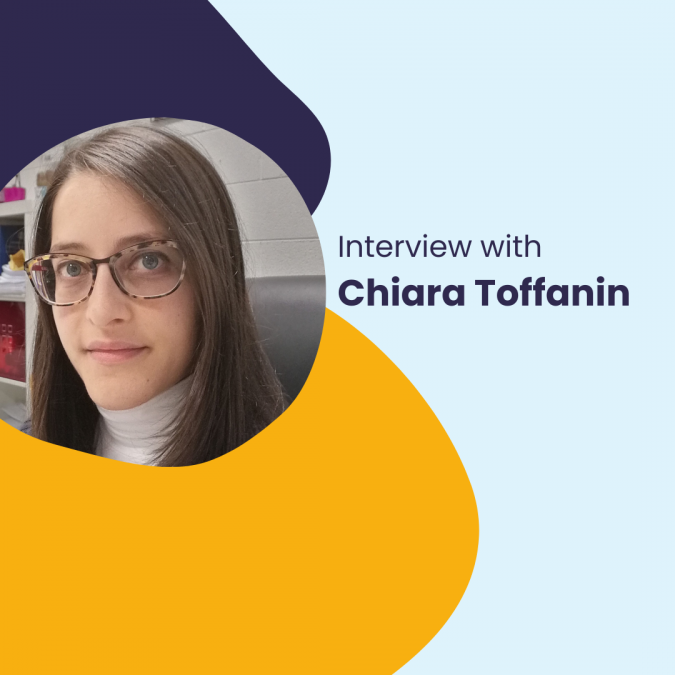
Algorithms in Diabetes Management: Expert Interview with Chiara Toffanin
On the occasion of the International Day of Women and Girls in Science, we asked our consortium member Chiara Toffanin what inspired her to pursue a career in computer science and why being involved in the software development of medical devices is especially interesting.
Since 2022, you have been an Associate Professor of Computer Science at the University of Pavia. How did you get into this field of research? Was there a particular experience during your childhood or adolescence that led you to pursue this path?
Research wasn’t a dream I carried with me since adolescence. I’ve always been a curious girl, eager to learn, but the academic world was never part of my initial plans. It was only at university that I had the chance to explore this field more closely, and I quickly became fascinated by it.
Even though research in Italy doesn’t receive the same financial support as it does in other countries, the passion and dedication of the researchers and professors working in this environment are truly unparalleled. During my master’s thesis, I had the opportunity to work on the artificial pancreas project in its early stages and I actively participated in clinical trials. This experience allowed me to understand how research in this area could truly change and improve patients’ lives. Speaking directly with them and seeing how my work could contribute to their well-being fueled an ever-growing passion - one that ultimately led me to pursue research as my career.
Developing algorithms for medical devices is a highly specialised area of computational science. What makes this research field particularly appealing to you?
This field of research is incredibly appealing because you can truly and concretely contribute to improving the quality of life of people around the world. There are countless fascinating research areas, and the same techniques can be applied, for example, to projects in agriculture or even in industry, as they are highly versatile. However, the satisfaction of seeing that your work is directly helping people to live with this condition is unmatched.
Moreover, unlike an industrial system, the human body is a unique, extraordinary, and constantly evolving machine, which requires a level of adaptability and personalisation that is not demanded in other contexts. This continuous push for innovation makes research in this field truly exciting and it is also deeply engaging for young students.
Your team at the University of Pavia contributes to the development of an algorithm that is part of the MuSiC4Diabetes device. Why is it important to integrate algorithms into diabetes management technologies?
Even though diabetes management technologies have greatly improved over the past decades, they still cannot address all the challenges associated with this condition. Diabetes affects adults, adolescents and children, each with very different characteristics. Therapy therefore needs to be personalised to the individual, but it must also be able to adapt to the person’s changes over time.
A control algorithm uses a variety of information and measurements to define the most promising therapy, with the ability to modify it along the way whenever an unexpected patient response is detected. In this way, potentially dangerous situations can be avoided, because the algorithm automatically recognises when a problem or a change occurs and adjusts its action accordingly. In this context, new data‑driven and machine learning techniques represent a promising resource - but they must be used responsibly to avoid risks to patient safety.
Which variables and aspects are crucial for an algorithm used in metabolite monitoring?
For an algorithm that uses metabolite monitoring, the key elements are the reliability of the measures and the interpretability of the specific sensor data. It is important to have precise measures of the metabolites but also knowing what they represent and which information they contain, in order to properly use them to improve the therapy and anticipate unwanted behaviours. Since metabolite levels can fluctuate quickly, the algorithm must react in real time. At the same time, it has to filter noise and adapt to biological variability in order to promptly respond to changes without causing abrupt reactions to sensor noise. Finally, safety is crucial, so the system must detect unexpected patterns and handle them to maintain patient health.
What data form the basis for designing models to predict glucose, lactate, and ketone concentrations in people with diabetes?
In order to train these models, it is important to collect data not only related to these metabolites, but also to the state of the patients (insulin therapy administered, carbohydrate intake, exercise intensity and type, hyperglycaemia conditions, etc.). In fact, they are crucial to understand the evolution of each metabolite in different conditions and to assess how they are influenced by different disturbances. The patient’s highly variable response to physical exercise, for example, plays a key role in the timely and appropriate adaptation of therapy to optimise glucose control.
How do you envision diabetes management five years from now?
I think two scenarios will be available in 5 years: the first is a new generation of subcutaneous, non-invasive artificial pancreas systems, that include not only glucose but also multi-metabolite sensors, capable of considering multiple aspects to optimise insulin therapy and predict patient needs. This will be the evolution of the current commercial artificial pancreas, given that the first versions of these sensors are on the verge of commercialisation.
The second is a new generation of implantable devices able to overcome most of the delays associated with the subcutaneous ones, to simplify therapy optimisation and to achieve more physiological regulation. This system is the aim of MuSiC4Diabetes and I’m confident that we will make an important contribution to this goal. Of course, each individual with Type 1 diabetes will be free to choose the most suitable solution for their needs.